

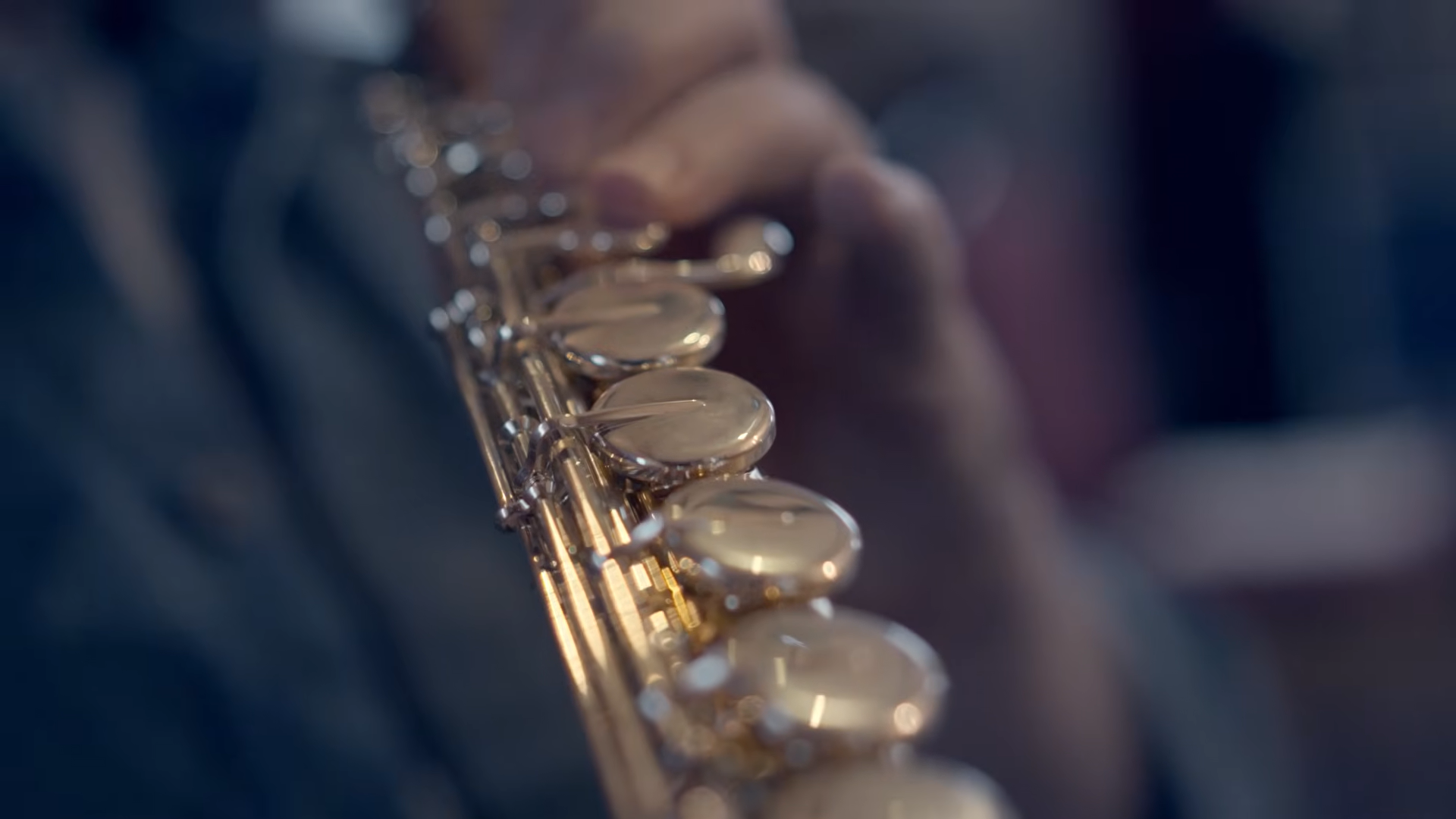
Fracture Sounds have released the Alternative Woodwind Ensemble, the latest addition to their free Blueprint series for Kontakt Player. Unlike many recent free orchestral samples that focus heavily on textures, atmospheres and evolving soundscapes, this library takes a more traditional approach and delivers a practical collection of ensemble woodwind articulations built from some decidedly unconventional instruments.
The library requires Kontakt Player 8 or later – which is free – and is compatible with Windows and macOS systems. Registration on the Fracture Sounds website is required to obtain a serial number, after which the library can be downloaded and installed through Native Instruments Native Access. Download size is 2.5 GB, expanding to 5 GB after installation. As a Kontakt library, it supports VST 3, AU and AAX plugins as well as standalone operation.

Developer: Fracture Sounds
Supports: Kontakt & Kontakt Player 8 and up, Windows PC and Mac (Stand-alone, VST3, AU, AAX / 64-bit)
Size: 5 Gigabytes
Alt Woodwind Ensemble derives its samples from Fracture Sounds’ commercial Alternative Woodwind Soloists collection and combines four instruments into a single playable ensemble:
- Alto Flute
- Bass Flute
- Bass Clarinet
- Tenor Recorder
These are not instruments typically found at the center of a traditional orchestral woodwind section, which immediately gives the ensemble a distinctive character.
Sound and Performance
The overall sound is pleasant, neutral, and very usable. It leans firmly toward the classical side rather than modern hybrid scoring, making it a good fit for traditional orchestral writing, chamber music, film scoring, historical productions, pastoral arrangements, Medieval and Renaissance music, and even Baroque-inspired compositions.
In terms of articulations, Alt Woodwind Ensemble keeps things relatively simple with three patch types: dedicated Sustains, Staccatos and a combined Staccatos + Sustains Performance patch that automatically switches between short and long notes based on MIDI velocity. While the articulation selection is not extensive, it covers the essentials.
The short articulation generally carry a brighter, punchier character that helps them cut through a mix and offer a broader dynamic range. Fast passages feel responsive and articulate, making the library particularly well suited for rhythmic woodwind writing and short-note runs. The sustain articulation is comparatively more restrained. While the shorts offer smooth transitions and natural expression, the sustains never quite reach a true fortissimo intensity and generally remain within a softer to medium dynamic range. The low frequencies also remain crisp and well-defined throughout the library’s overall sound.
Short + Sus Performance Patch
The included Short + Sus performance patch is probably the most practical patch in the entire library.
It automatically combines both articulation types into a single playable instrument and works well for quick sketching as well as finished productions. For some reason, however, it is not loaded as the default patch.
My only real complaint here is the lack of control over the triggering threshold used to switch between short and long notes. Additional adjustment options would have made the instrument more flexible for different playing styles.
Sampling Structure
Alt Woodwind Ensemble does not feature individually sampled notes across the entire keyboard. Instead, a single sample is stretched across neighboring notes, effectively covering three playable notes at a time – the original sampled note plus one semitone above and below it.
While some may view this as a limitation, it is not necessarily a case of Fracture Sounds deliberately stripping content from the free version. More likely, it comes down to overall library size. Sampling every individual note would significantly increase the storage footprint and download requirements. Furthermore, each additional sampled note would also require corresponding dynamic layers and round robin variations, multiplying the overall sample count several times over. This approach strikes a sensible balance between efficiency and sound quality.
The playable range extends across exactly four octaves, from low C to high C, which conveniently accommodates most standard MIDI keyboard controllers.
Round robins range from two to three variations per note, with the short articulations receiving the larger variation count. The library also includes two sampled dynamic layers that blend naturally through velocity and dynamic crossfading.
Although I could not fully verify it, the sustain patches also appear to include sampled Release triggers, helping notes decay in a more natural manner.
Microphone Perspectives
Alt Woodwind Ensemble includes three microphone perspectives:
- Close
- Mid
- Far
All three sound pleasing and professionally captured.
The Close position is extremely narrow and approaches mono territory, although that is fairly typical for close microphone signals.
Each microphone can be adjusted independently, while a dedicated Perspective slider allows users to blend between positions quickly for more fluid depth control and three-dimensional staging.
Effects and Controls
The effects section remains straightforward and includes everything most users are likely to need.
Available processors include:
- Colour (tone shaping)
- Stereo Width
- Reverb
The reverb module is surprisingly versatile. In addition to standard synthetic Room and Hall algorithms, it also includes a Convolution mode featuring various Impulse Response samples. For more atmospheric productions, there is also a Shimmer reverb option capable of producing the familiar spacious, ethereal tails often associated with ambient and cinematic music.
Additional controls hidden behind the cog menus include:
- Sample Start adjustment for latency management and sample offset control
- Dynamic Response control for narrowing or expanding the sustain articulation’s dynamic range
Fracture Sounds Present: Refreshingly Playable Kontakt Woodwinds
This latest Blueprint release feels like a breath of fresh air.
For quite some time, many free orchestral libraries have focused primarily on textures, ambient layers, and softer atmospheric content. While those libraries certainly have their place, Alt Woodwind Ensemble offers something that feels more immediately useful across a wider range of production scenarios.
Between its responsive short articulations, balanced sound, practical feature set and unusual instrument combination, it fits comfortably into classical, orchestral, cinematic, chamber, soundtrack, folk, historical and even certain contemporary production contexts.
Most importantly, it feels like a library designed to be played rather than simply layered in the background, and that’s something I personally would like to see more developers prioritize.


